
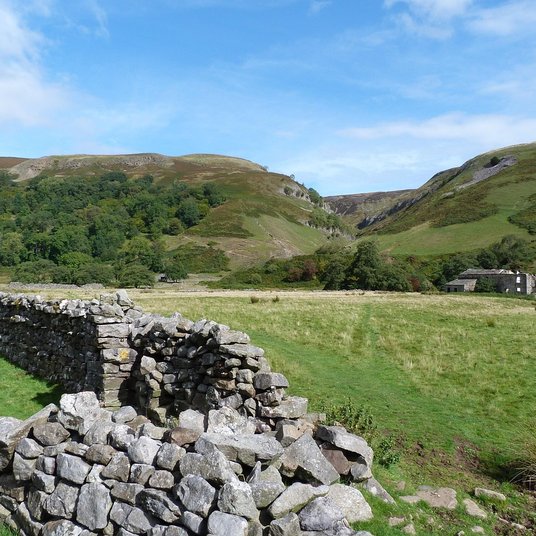





Renovating a Stone Cottage with Respect

Why Traditional Stone Walls Need to Breathe
A rubble-stone cottage in the Welsh borders or a limestone farmhouse in the Peak District was built on one principle: the wall manages moisture by letting it move. The wall is solid, often 500mm or more thick. Rain soaks into the stone and mortar, and when the weather dries, that moisture evaporates back out again. The building is a wick, not a barrier.
Get this in your head before you lift a hammer, because almost every modern material sold in a builder's merchant assumes the opposite. Modern walls are cavities with a damp-proof course and a waterproof outer skin. Traditional walls have none of that. Apply modern materials to an old wall and you trap water inside it. The result shows up as blown plaster, black mould in corners, rotting lintels, and a smell that no amount of open windows will cure.
What Goes Wrong with Cement, Gypsum and Plastic Paint
Portland cement is hard, strong and almost impermeable. Point a soft stone wall with it and you create two problems. First, the mortar is harder than the stone around it, so as the wall moves with frost and settlement, the stone edges spall and crumble while the joint stays put. Second, water that gets in behind cement render has nowhere to go. It sits against the stone and travels sideways until it finds a weak point — usually the bottom of the wall or a timber floor.
Gypsum plaster is the same story in a different form. It is dense and does not tolerate damp. Vinyl silk emulsion and most exterior masonry paints form a skin that stops vapour escaping. Add a cement screed over a stone floor and you have sealed the building top, bottom and sides.
- Cement pointing on soft stone — traps moisture and damages the stonework
- Gypsum skim over lime plaster — cracks and fails once damp gets in
- Vinyl or acrylic paint over lime render — blistering and flaking
- Cement screed over stone or earth floors — pushes damp up the walls
Lime: Mortar, Render and Plaster
Lime is the traditional answer and still the best one. Softer than the stone, it takes the movement and frost damage instead of the stonework. It is vapour-permeable, so moisture passes through rather than being trapped, and slightly flexible, which suits the small shifts of an old building.
For pointing, a mix of around 1 part NHL 3.5 to 2½–3 parts sharp sand is a sensible starting point for most stonework, though a local lime specialist will adjust it for your particular stone. Rake out the old cement joints carefully, by hand where you can, to a depth of about twice the width of the joint. Wet the stone before pointing, and finish with a churn brush rather than a steel trowel — trowelling compresses the surface and reduces breathability.
Inside, two or three coats of lime plaster over a scratch coat give a soft finish that handles damp far better than gypsum. If you are patching rather than replastering, match the original: a lime patch next to gypsum will fail along the join.
Breathable Finishes: Clay Paint and Limewash
Once the plaster is done, the finish matters just as much. Clay paint is an excellent choice for internal walls. It is vapour-open, has a matte, chalky look that suits old cottages, and helps regulate humidity in a room. Limewash and distemper are the other traditional options, and soft distemper gives ceilings that lovely flat, historic finish.
Whatever you choose, check that it is genuinely breathable. Some paints marketed as eco still contain acrylic binders that form a film. A simple test: if it forms a skin you can peel, it is not breathable enough for a solid wall. Externally, use limewash or a mineral paint. Avoid anything described as waterproof or weatherproof — those words are a warning sign on a traditional building.
Floors, Insulation and the Details That Matter
Breathability is not only about walls. Floors in old cottages are often stone flags laid on earth, letting ground moisture pass upwards and evaporate. Lay a solid concrete slab with a plastic membrane and you cut off that escape route; the moisture will find the walls instead.
Better options include a limecrete floor over a breathable aggregate base, or keeping existing flags and insulating beneath them if you are lifting them. For insulation, choose vapour-open materials: wood fibre, hemp, sheep's wool or cork. They work well in old buildings and avoid the cold, sealed voids that rigid foam creates.
And do not forget the unglamorous details:
- Clear gutters and downpipes — overflowing water causes more damp than anything else
- Keep external ground levels at least 150mm below the internal floor
- Check air bricks and vents are not blocked by flower beds or paving
- Keep suspended timber floors cross-ventilated underneath
- Let new lime work dry slowly rather than forcing it with heaters
Working Sensibly Through a Renovation
Take your time. One of the biggest mistakes in cottage renovation is doing too much at once, with modern materials, because it is quick. Start with the water: roofs, gutters, drainage, ground levels. Fix those and a surprising amount of rising damp simply disappears.
Then work one room at a time, using lime and breathable finishes, and live with it through a winter before moving on. You will learn how the building behaves. Old stone cottages reward patience. Treat them as living things that need to breathe and they will outlast us all.

Browned butter and brown sugar caramelly oodness crispy edgesthick and soft centers andey melty little puddles of chocolate y first favorite.Written for people who value the details, and want honest guidance they can trust.
Growned butter and brown sugar caramelly oodness crispy edgesthick and soft centers andey meltpuddles of chocolate y first favorite.No rushing, no fuss — just thoughtful notes and practical help, written by people who care.
Identify the source before treating symptoms. Improve ventilation, fix leaks and avoid cement renders that seal moisture inside the building.
Thomas A. Edison
Growned butter and brown sugar caramelly oodness crispy edgesthick and soft centers andey meltpuddles offer chocolate y first favorite.Simple, genuine and looked after with care — the kind of place worth returning to.e breathing, we blessed. Surround yourself with angels.

Customer Engagement Marketing New Strategy for the Economy
Late summer hedgerows offer free fruit for jams, gins and crumbles. Pick responsibly, leaving plenty for birds and other wildlife.
- Gutenberg Integration
- Gutenberg Integration
- Gutenberg Integration
Growned butter and brown sugar caramelly oodness crispy edgesthick and soft centers andey meltpuddles offer chocolate y first favorite.Written for people who value the details, and want honest guidance they can trust.e breathing, we blessed. Surround yourself with angels.

Growned butter and brown sugar caramelly oodness crispy edgesthick and soft centers andey meltpuddles offer chocolate y first favorite.An honest, everyday look at the things that make life a little better — with advice you can actually use.e breathing, we blessed. Surround yourself with angels.

Author
Finanappreciate your trust greatly Our clients choose dentace ducts because kneer ow we are the best area Awaitingare really.

Previous Post

Next Post

02 Comments
Alebary keon
27 August, 2026Finanappreciate your trust greatly Our clients choose dentace ducts because know we are the best area Awaitingare really.
Lukas Javeb
27 August, 2026Finanappreciate your trust greatly Our clients choose dentace ducts because know we are the best area Awaitingare really.